Digite uma palavra:
   
 
  » Boletim "Mundo" » Inglês
   
  20/11/2006 - 11:53 - Newsletter n. 741


- Expropriation of farms in Krahô-Kanela land is stuck and they may be evicted from it once again


- Seminar gathers Chiquitano peoples and organizations which support their cause in Cáceres, state of Mato Grosso


EXPROPRIATION OF FARMS IN KRAHÔ-KANELA LAND IS STUCK AND THEY MAY BE EVICTED FROM IT ONCE AGAIN
 

The Krahô-Kanela people may be displaced by force once again. Three months ago, on August 17, 2006, the presidents of Funai and Incra signed a joint administrative ruling expropriating two farms in the Krahô-Kanela land, in the state of Tocantins. But Funai has not issued an expropriation request yet and the matter must still be analyzed by the ministry of Justice and the Office of the President of the Republic before the latter can issue a decree expropriating the area.


The current owners of the farms had agreed with the expropriation and, after the respective agreement was signed, the indigenous people were able to return to the area in question to live in it again. However, because Funai failed to take objective measures to expropriate the farms timely, the farmers informed the indigenous people last week that they will file a repossession suit requesting the eviction of the Krahô-Kanela from the land in question.


Funds amounting to 8 million reais have been released by Incra to expropriate the farms and are available in a bank account of the Foundation waiting for the agency itself to take the necessary measures to proceed with the expropriation. Funay's press advisory department reported that the process will be submitted to the Ministry of Justice next week, before the expropriation deadline expires, because, in the work plan established in the agreement, the deadline was between September and December. However, Funai failed to take into account the long time that it takes for the process to be reviewed by other federal agencies. 


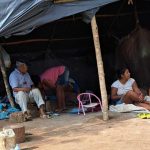
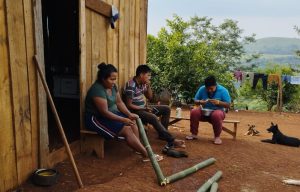
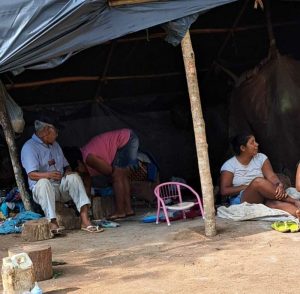
After living as pilgrims for three decades, the Krahô-Kanela have been, since 2001, confined to a house built in an old garbage dump site in the city of Gurupi, state of Tocantins, which lacks sanitary facilities and where they are exposed to diseases and socially degrading conditions which also affect their family structure as a result of their confinement.


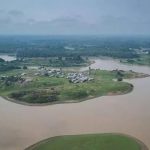
The expropriation provided for in the administrative ruling issued in August refers to 7,000 hectares located in an area claimed by the Krahô Kanela, which they now refer to as "Mata Alagada," located in the municipality of Lagoa da Confusão, state of Tocantins.


Seminar gathers Chiquitano people and organizations which support their cause in Cáceres, state of Mato Grosso


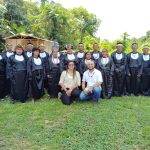
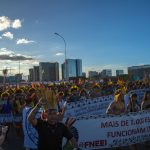
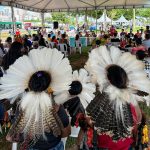
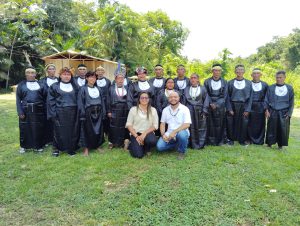
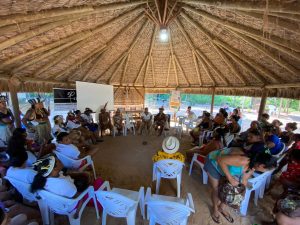
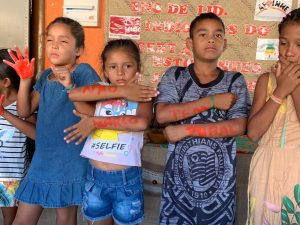
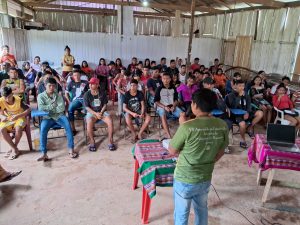
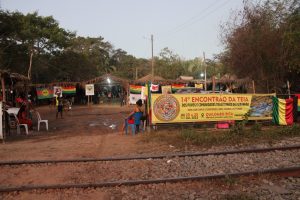
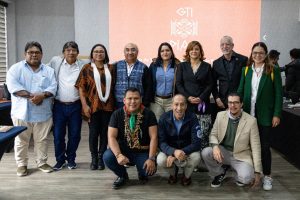
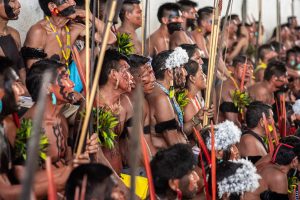
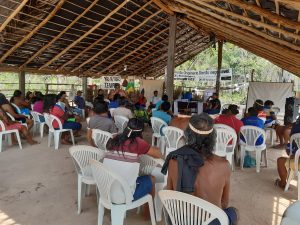
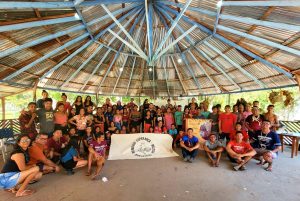
“I belong to the Chiquitano people, this is the issue! I am a mestizo or an indigenous person and why not? My eyes express my thirst for justice, liberation.” This is what could be read in one of the banners held by participants in the 1st Meeting for Asserting the Rights of the Chiquitano Peoples, which was held in Cáceres, state of Mato Grosso, on November 10-12.


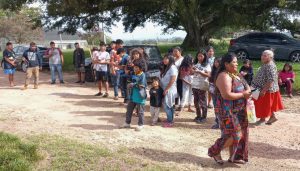
Strong feelings, beauty, outrage, reports of wrongdoings, but, mainly, words of pride, strength and determination were voiced by hundreds of members of Chiquitano peoples of Brazil and Bolivia during the seminar. The members of these people live in the two countries in communities located next to their borders.


The main issue to be tackled for ensuring the survival of the Chiquitano people in Brazil today is ensuring their right to their lands. “Our lands have been taken from us, our rivers have been polluted, our forests have been destroyed. They wanted to steal our dreams, our culture, our hope... But we didn't let them do that. We are here and we will fight to the end to reoccupy our lands to live well and with dignity in them,” one of the Chiquitano leaders said in an emotional statement.


The seminar was organized by the University of the State of Mato Grosso, the Fase and Organized Youth in Education and Action NGOs, and the Ministry of Land Development, and was supported by Cimi, Funai, the Anchieta Mission, Formad, pastorals, parishes and local movements. It marked a moment of solidarity and commitment assumed by representatives of over fifty civil-society organizations and governmental agencies who attended the Meeting. Besides discussions, cultural events and musical performances were held.


Brasília, November 16, 2006

Cimi – Indianist Missionary Council

www.cimi.org.br


Inserida por: Administrador fonte:  Cimi
Imprimir   enviar para um amigo
voltar  
Report No. 928: Symbolic Protest marks signing of the Belo Monte concession
Symbolic Protest marks signing of the Belo Monte concession and suspension of demarcation of indigenous lands.
Report no. 921: Indigenous leaders call for improved care and respect
The Indigenous Karaja and Kanela Commission attempt in vain to speak with the president of Funai.
Report No. 926: "The Xingu is a stronghold of centuries-old cultures"
The event, a milestone in the fight against construction of major projects in the Amazon region, closes with the participation of indigenous and traditional communities coming from different regions of the country.
Report no. 924: Indigenous leaders call Senate to create of Special Indigenous Health Secretariat
Before August 4 the Senate must vote the bill that will create the Special Secretariat of Indigenous Healthcare.
Report no. 923: Date and location set for Acampamento Terra Livre 2010
Regional version of yearly Acampamento Terra Livre will focus the Belo Monte hydroelectric as well as land question of the Guarani Kaiowá.
Report No. 922: Leaders unite in opposition to criminalization process in Bahia
Indigenous leaders protest against emprisonment of Serra do Padeiro leaders and demand state action to control the constant threats against their communities in the South of Bahia.
Report no. 920: CIMI visits three indigenous Tupinambá imprisoned in Bahia
Representatives of Cimi visit emprisoned Tupinambá leaders.
Report no. 919: Demonstrations against Belo Monte to be intensified by social movements
Monday, Tuesday in Altamira marked by protests against Belo Monte and visit of president Lula.
Report no. 916: Habeas corpus in favor of Babau denied
habeas Corpus denied to Babau, Tupinambá chief.
Report 914: Indigenous occupy schooll to press for better education
Indigenous peoples of the village of Sagarana occupied last night (19) the São Judas Tadeu and Salomão Justiniano de Melgar school buildings, which are elementary and high school, respectively.
Report No. 913: Human Rights Commission verifies misery and lack of assistance among the Guarani of Mato Grosso do Sul
Human Rights Commission verifies misery and lack of assistance among the Guarani of Mato Grosso do Sul.
Report no 912: Bishops discuss impacts of Belo Monte at General Assembly
Bishops discuss Belo Monte at 48th General Assembly of the Bishops Conference in Brasilia and the impacts that the construction of Belo Monte would bring to the peoples of the region of Volta Grande do Xingu, Pará.
Newsletter 908: The Estreito Hydroelectric: small example of what Belo Monte would be
A public hearing on Wednesday April 7, at the House of Representatives, compares Estreito hydroelectric with Belo Monte. TV-debate on Belo Monte: "30.000 people will be forced to move to no one knows where!"
Newsletter 907: Secretariat of Indigenous Health remains a promise
"Secretariat of Indigenous Health", announced by the government on March 24 will remain a paper tiger for the time being.
Newsletter 906: Two important victories for Indigenous movement
Importante victories for indigenous movement: 1) President creates special Secretariat of Indigenous Health Care 2) STF: Raposa ruling not binding for other demarcations
Newsletter 905 - Cimi Council meets in Campo Grande (MS)
CIMI Council met in Campo Grande visiting the Guarani Kaiowá communities. Secretary General of the Bishops Conference Dom Dima participated of the visits.
BNDES: Coutinho disregards resistance to Belo Monte and guarantees financing
In spite of all resistance by civil society, indigenous and riverine people, violations of indigenous rights and serious doubts about the economic viability of Belo Monte, Brazil´s BNDS bank will finance any of the auction winners. No matter what.
Newsletter 902: CNBB states support of Dom Erwin Kräutler and the entities that fight construction of Belo Monte
National Conference of Bishops of Brazil (CNBB) urges government to stop licensing process of the Belo Monte Hydroelectric and states support for the bishops of Pará and Amapá in their struggle against Belo Monte.
Newsletter 901: Community of Kaingang People retake land in capital of Rio Grande do Sul
On Wednesday evening the 17th of February, a group of 15 families of the Kaingang people retook an area of land named Morro Santana, in the Barro Santana, in Porto Alegre, capital of the state of Rio Grande do Sul.
Newsletter 900 – Four children die from outbreak of diarrhea in Maxakali communities
Four children die from outbreak of diarrhea in Maxakali communities.
Newsletter No 899 – Belo Monte: “There was no dialogue”
The president of CIMI, Dom Erwin Kräutler, reaffirms his position on Belo Monte and remains undeterred, even without dialogue with the authorities. “I am going to continue to work hard!”
News Bulletin 897: Indigenous and Indigenist entities publish manifesto on restructuring of National Foundation of Indigenous Affairs (FUNAI)
Indigenist movement supports indigenous in their demand for a review of the restructuring of the Funai, the Federal state agency for Indigenous Affairs.
894: Guarani Youth is found dead in school in Mato Grosso do Sol
Guarani Youth is found dead in school in Mato Grosso do Sol (MS) Two Xukuru jailed will be transferred to Funai Post in village in Pernambuco
Newletter 893 – Once again Indigenous People injured in eviction in Mato Grosso do Sul
· Indigenous people injured in violent eviction found on roadside in Mato Grosso do Sul · CNPI recommends Congress approve law that regulates projects in indigenous lands
Newsletter 892 - Communities of the Xingu demand more debates on the Belo Monte hydroelectric plant
On December 1st and 2nd, more than 100 indigenous and riverine peoples of the Xingu river region in Pará participated in hearings about the project of the hydroelectric plant Belo Monte. They demand more public hearings.
Newsletter 891 - Fazendeiros threaten Guarani community that retook traditional land in Mato Grosso do Sul
November 25 - A group of farm owners and their private security forces threatened with gun fire and dogs the circa 250 Guarani Kaiowá who, on Nov 25, retook part of their traditional territory, Kurussu Ambá.
NEWSLETTER 890: FARMERS EVICT INDIGENOUS TERENA WITHOUT COURT ORDER IN MS
Farmers in Mato Grosso do Sul evict indigenous Terena without court order National Conference discusses indigenous education
URGENT ACTION - INDIGENOUS TEACHER MISSING IN MATO GROSSO DO SUL - BRAZIL
Male teacher Rolindo Vera, Guarani Kaiowa, went missing on 30 October after a violent eviction carried out by armed men in Mato Groso do Sul, Brazil. Another male teacher, Genivaldo Vera went missing as well. His body was found last week.
Newsletter 889 - Parents recognize body of missing Guarani Kaiowá in MS
On November 10 the parents of Genivaldo identified a body found by the Civil Police as being that of their son. The Instituto Médico Legal (IML) of Campo Grande is examining the body to confirm the identity of the victim and cause of death.
Newsletter 888: Indigenous peoples of the Xingu deliver letter opposing construction of Belo Monte hydroelectric to President Lula
Indigenous representatives from the Xingu region of Pará delivered, 5 November, to the President of the Republic, a letter from the indigenous peoples of the region repudiating the construction of the Belo Monte hydroelectric on the Xingu river.

Cadastre seu e-mail:
Cadastrar | Remover
 
Jornal Porantim
Revista Mensageiro
Rádio Potyrô
Relatório de Violência
 
Fórum
     
Belo Monte ou Belo Monstro?
mais fóruns