
Digite uma palavra:
   
 
» English version » News
 

19/08/2010 - Freedom for Tupinambá chief Babau, his brother and sister

Yesterday (16/8) chief Rosivaldo da Silva, better known as “Babau”, of the Tupinambá people, his brother Givaldo Jesus da Silva and his sister Gliceria Jesus da Silva were released from prison where they were waiting the preparations of a trial against them.


The brothers and sister are the leaders of the community of the Serra do Padeiro, of the indigenous Tupinambá people, in the South of the state of Bahia, Brazil. The leaders have returned to their community. They will have to remain at the disposition of the authorities during the investigations of the allegations.


Illegal arrest

Rosivaldo, better known as Babau chief, had been detained since March this year. He had been arrested by the Federal Police in his home during the night – which is illegal in Brazil. Givaldo was arrested days later, while repairing his car in town. Glicéria has been in jail of Jequié since June 2010. She was arrested along with her two months old son, when arriving at the Ilhéus airport on the way back from a meeting with President Lula in Brasilia, the day before.


Struggle for land

They are being accused of a series of crimes. They deny and no proof has been presented so far. The accusations are part of a broader conflict, which is about the struggle for the recognitions and demarcation of their traditional lands. Defined by the Federal indigenist state organ Funai, local ranchers, business men and politicians resist this demarcation process violently, which has created various violent conflicts over the years.


Criminalization

The arrests are part of pattern of persecution and criminalization of the Tupinambá leaders, a series of violent invasions by the Federal police over the last years, including cases of  torture. The Indigenous Missionary Council (CIMI) has denounced over the years the severe criminalization several indigenous leaders in Brazil have suffered, such as the Xokleng, Guarani Kaiowá, the Xucuru and the Tupinambá.


As a strategy to create awareness among the public and to mobilize the public opinion, various campaigns were organized by social movements, both indigenous and non-indigenous, demanding freedom of the leaders Tupinambá. Also complaints were filed by the authorities about the case.


Complaints to the UN

In June this year, CIMI and Global Justice forwarded an elaborated complaint to the United Nations (UN) on the cases of torture and unlawful detention of the Tupinambá leaders. The document had international repercussions. In the complaint, the two entities reported in detail the illegal acts of the federal police in Bahia concerning the Tupinambá. Concluding: "The serious violence in the countryside - especially the suffering indigenous people of Brazil - is caused by a lack of accountability of public officials who violate rights, by the criminalization of leadership and the failure to implement the constitutional right to the demarcation of indigenous lands, recognition the value, dignity and rights guaranteed by the Constitution and international indigenous peoples. "


History of police aggression

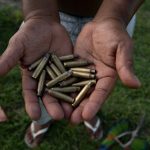
The arrests of these leaders was not the first assault suffered by the Tupinambá. In 2008, during an attempt to arrest chief Babau, the Federal Police entered the village destroying the school of the community and assaulting Babau´s brother and the elder Jurandir Ferreira Mattos Guerreiro with rubber bullets. Two days later, about 130 officers returned to the community, with a large number of officers and cars, realizing a violent invasion. They destroyed furniture, burned fields and injured dozens with rubber bullets.


Last year, new arbitrary acts were committed. Five members of the Tupinambá community were arrested and suffered abuse of power by agents of the Federal Police. One of the victims was a woman. During this illegal action, they were sprayed with pepper spray and three of them received electric shocks, on several parts of their body – including in the genital region –, leaving burns. This treatment was confirmed by the Legal medical Institute of Brasília. The responsible officers were not punished.


Photos:

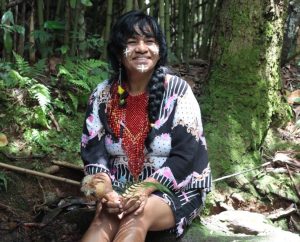
  • Chief Rosivaldo da Silva, better known as "Babau" 
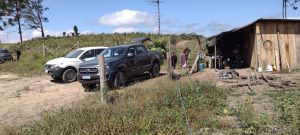
  • The school of the Serra do Padeiro, in the background the holy mountain that gives the name to the community
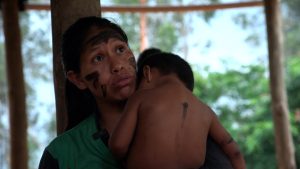
  • Wounds inflicted by rubber bullets of the Federal Police

Inserida por: Administrador fonte:  Indigenist Missionary Council (Cimi)
Imprimir   enviar para um amigo
Press conference opens ATL 2010 in Campo Grande
The yearly indigenous, national Free Land Camp highlights discrimination against indigenous people in Mato Grosso do Sul (MS) and the lack of demarcation of lands.
Central points Report on Violence Against Indigenous Peoples in Brazil - 2009
The Report on Violence Against Indigenous Peoples in Brazil-2009 once again highlights the sad situation of the state of Mato Grosso do Sul (MS) in the matter of violence against the indigenous peoples.
Violence against Indigenous Peoples: indices continue to be alarming
CIMI releases Report on Violence Against Indigenous Peoples in Brazil. Data references calendar year 2009
Letter to UN special rapporteurs denouncing criminalization of Tupinambá
Letter to UN special rapporteur Anaya denouncing criminalization of Tupinambá.
Cimi launches report Violence against indigenous peoples in Brazil: numbers continue alarming
Cimi Launches Report on Violence Against Indigenous Peoples in Brazil.
Memorandum on Lula's visit to Pará
Memorandum of the civil society organizations on the visit of Lula to Altamira, Tuesday, June 22, with the intend to promote the hydroelectric of Belo Monte on the Xingu river.
Amazon mega-dams endanger uncontacted Indians
Two mega-dams being constructed in the Brazilian Amazon threaten to devastate several groups of uncontacted Indians.
Memorandum of CIMI regarding transfer of Tupinambá leaders to maximum-security prison in Rio Grande do Norte
Open Letter of CIMI on the transfer of Tupinambá leaders to maximum security prison in Rio Grande do Norte.
Federal Judge reverses injunction suspending Belo Monte auction
Federal Judge reverses decision that suspended the auction of Belo Monte as well as the environmental license.
Solidarity with the Tupinambá people - Free Cacique Babau
Cacique babau was arrested in a unlawful manner, without legal grounds.
Federal Judge suspends auction and Belo Monte licence
Federal judge of Altamira (state of Pará) suspends auction and Belo Monte licence seeing irregularities in the process.
Members of the SEDH visit “cacique Babau”, imprisoned by the Federal Police in Salvador, Bahia
Human Rights authorities visit arrested chief Babau, of the Tupinambã community Serra do Padeiro, in the south of Bahia. They affirm that the arrest was not legal and one more violence against the indigenous Tupinambã.
CNBB defends urgent changes in the Brazilian state, with democratic participation
CNBB defends urgent changes on the Brazilian state, with democratic participation in a reaction to the high number of political corruption scandals.
Fraternity Campaign and Indigenous Peoples
Ecumenical Fraternity Campaign of 2010 promotes an economy in service of life, without exclusions, creating a culture of solidarity and peace.
Memorandum of solidarity of the National Conference of Bishops of Brazil (CNBB) to the social movements
Letter of solidarity with the social movements struggling against the hydroelectric Belo Monte issued by the bishops of the Amazon region
ILO awaits response from Brazilian government regarding violations by the Transposition
The UN, the ILO and the World Council of Churches received the delegation from the “Campaign Opará – Indigenous Peoples in defense of the Rio São Francisco”, Geneva, February 1.
“Your development is our massacre”: Indigenous delegation denounces Transposition in Europe
Indigenous delegation raises alarm in European countries over the transposition project: the São Francisco River has suffered too many aggressions, the environmental damage would be irreparable and lead to the death of the river.
Denunciations against Transposition resonate in Italy
The Indigenous delegation from Brazil’s Northeastern region, which is denouncing the impact of the transposition of the São Francisco river, encounters great receptivity in Italy, the first country on a tour of Europe.
Court solicits Funai identification of indigenous land in Pecém
Judge decides in favour of Anacé people, ordering state government to abstain from realizing any expropriation in the lands occupied by Anacé indigenous community.
Lula Government: successive disservices to the indigenous peoples in Brazil
Yet another manifestation of the negligence of the Brazilian government of the indigenous peoples and their rights: Decree 7056/2009, on the restructuring of the National Foundation of Indigenous Affairs (FUNAI).
Memorandum on the restructuring of the FUNAI
Manifesto of support to the indigenous entities and Indigenous Organizations
FUNASA denies medical care in Mato Grosso do Sul: absurdities from an ominous indigenist policy
A two year old girl died of diarrhea and dehydration in Kurusu Ambá as the Funasa refused to give medical assistance. Because the community lives in "litigated land". But healthcare is a fundamental right, independent of location.
Ethnocide in Mato Grosso do Sul. Special interview with Egon Heck
The virulence of violence against the indigenous peoples in Mato Grosso do Sul is increasing shockingly. Every day, new cases of atrocities occur, especially against the Guarani Kaiowá.
A Christmas story: And if the child Jesus chose to be born a Brazilian in 2009?
What if the child Jesus chose to be born to a humble family, as that of Nazareth, that today was traveling, together with their people, on a long journey? In this case, these days He would choose to be born Guarani-Kaiowá!
Letter to UN rapporteur on indigenous rights about Belo Monte hydrelectric
Letter of COIAB and ISA about the Belo Monte Hydroelectric Plant to James Avaya, Special Rapporteur of the United Nations for Human Rights and Fundamental Freedoms of the Indigenous Peoples.
Communique of the Indigenous Peoples
Comuque of the indigenous communities of the Xingu region to the Brazilian authorities on the construction of the Belo Monte hydrelectric plant.
Belo Monte and Global Warming: Indigenous Peoples and Traditional Communities at COP 15
Indigenous leaders and traditional communities speak on climate change on Copenhague Climate Summit.
Netherlands Ambassador visits Kaiowá Guarani village on International Day of Human Rights
The Ambassador of the Netherlands, Mr. Kees Pieter Rade, paid a morning visit to the Guarani Kaiowá village Te’Yikue, Mato Grosso do Sul.
The Indigenous Peoples and the Belo Monte hydroelectric project
The Commission on Indigenous Affairs of the Brazilian Association of Anthropology (ABA) is profoundly concerned as to the how the government is pushing the Belo Monte hidrelectric project.
ORE ROIMÉ NDEREHE’YM (We miss you)
Police, prison, court, judge, penal code, latinorum. These institutions rarely punish crimes committed against indigenous peoples. Because of this, the Guarani have no confidence in the justice of the whites. T hey believe only in prayer.

Cadastre seu e-mail:
Cadastrar | Remover
 
Jornal Porantim
Revista Mensageiro
Rádio Potyrô
Relatório de Violência
 
Fórum
     
Belo Monte ou Belo Monstro?
mais fóruns